|
:: Contact Lenses
Can I Wear Contacts?
If
you want to wear contact lenses, you must first have a
comprehensive eye examination. This is the case even if you
don't normally wear glasses, and just want contacts to change
your eye color. The reason? Contact lenses are medical devices
that need to be properly fitted by your eye doctor. In the
United States, contacts can be legally purchased only with a
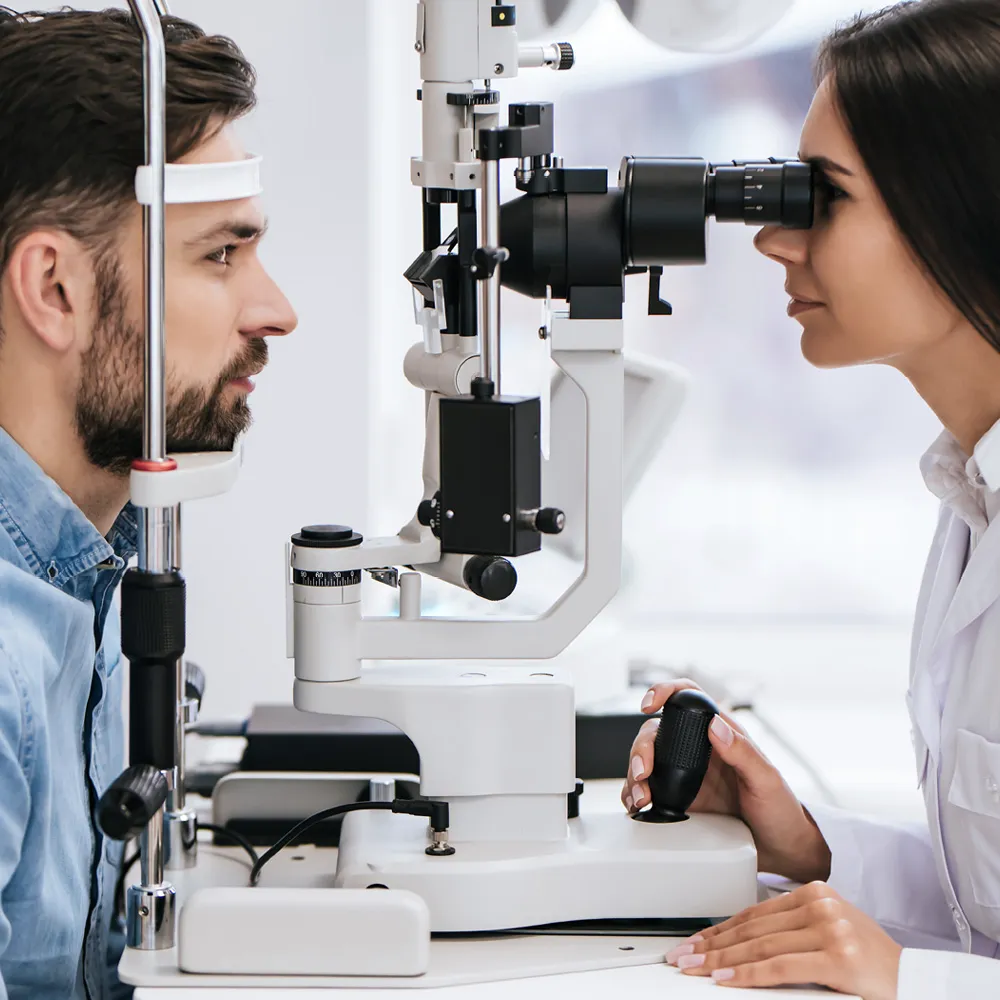
valid written prescription.The eye doctor will check your eyes to make
sure it's okay for you to wear contacts; today, nearly everyone
can, but there are a rare few who can't. Then, he or she will
determine your prescription.
The selection of contact lenses available can best be described
as "huge." Don't worry about becoming overwhelmed, though:
contact lenses can be broken down into several main categories
based on what they're made of, how often you need to replace
them and whether you can sleep in them and… Good News! The
doctor will help you with all of theses options!
Contact lenses are made of many different
types of plastic, but they are divided into two main groups:
soft or rigid gas permeable (RGP lenses, now called GP lenses).
Soft contacts contain from 25% to 79% water, are easy to adapt
to and are quite comfortable. Rigid gas permeable contact lenses
take longer to adapt to, but are more durable and more resistant
to deposit buildup. They tend to be less expensive over the life
of the lens (but the upfront cost is higher) and can offer some
people crisper vision than they would have with soft contacts.
The replacement schedule of a contact lens
refers to how long you can safely wear it before you need to
throw it away. With GP lenses, you generally replace them every
couple of years, because they are made of a very durable
material (though a prescription change would necessitate new
lenses). Soft contact lenses come in a wider variety of
replacement schedules.
Thinking about changing your eye color?
Contact lenses are available in four basic types: visibility
tints, enhancement tints, opaque color tints and light-filtering
tints. Most contacts are available in both prescription and
plano (without visual correction). Available on a more limited
basis are lenses designed for people who require astigmatism
correction and people who need bifocals.
Visibility tint is a very light tint that does not affect eye
color but is tinted solely to help you see the lens during
insertion and removal.
For patients that want to intensify their light colored eyes, an
enhancement tint is usually recommended. Enhancement tints are
solid, translucent colors that are slightly darker than
visibility tints.
For a more noticeable, dramatic change in eye color, opaque
tints are suggested.
Contact lens technology has greatly improved over the years and
manufacturers can now effectively simulate the irregular pattern
of lines and blends of different colors that naturally occur in
the iris. Opaque contacts typically mask the natural color of
the iris but with the latest technology not only change the
color of dark eyes but serve to illuminate the eyes, creating a
more radiant look. The wearer sees through a clear area in the
center of the lens while showing the world a different eye
color.
Special eye effects can be achieved with opaque lenses also
known as costume or theatrical lenses. They are widely available
for novelty use and are especially popular for Halloween.

Athletes of all kinds have discovered the advantages of
wearing contacts when participating in sports or working out.
Contacts don't steam up from perspiration, don't smudge and
don't get foggy if you go from cold to warm temperatures. They
provide better depth perception and peripheral vision. Today's
contacts stay on your eyes, even during vigorous activity. In
addition to these benefits, light-filtering contacts make
certain colors “stand out” – such as the color of softballs,
tennis and golf balls. For tennis, football, soccer and
baseball, amber tints are suggested. Grey-green tints are
available for running and golf.
Colored contact lenses can be a great fashion accessory. You can
change your eye color based on your mood, outfit, makeup or
plans. Get a collection of colors so that you can change your
eye color daily…see if anyone notices!
Some Disadvantages of Color Contact Lenses
It's important to be aware that while manufacturers have made
different sized lenses to fit most wearers, there will be some
occasions (such as during blinking) where the colored portion
may slide somewhat over the pupil. Also, the size of your pupil
is constantly changing to accommodate varying light conditions —
so sometimes, like at night, your pupil may be larger than the
clear center of the lens. In these instances, your vision may be
slightly affected.
And just so you
know…never, ever share contact lenses and
never, ever put
contacts in red or irritated eyes!

 |